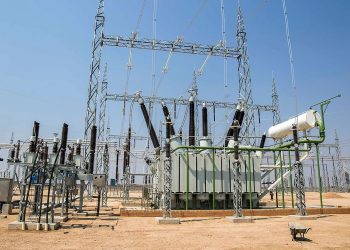
Namibia Power Corporation (NamPower) has invested more than N$21.8 billion in electricity infrastructure over the past 30 years, expanding its generation and transmission network as demand for power increased across the country.
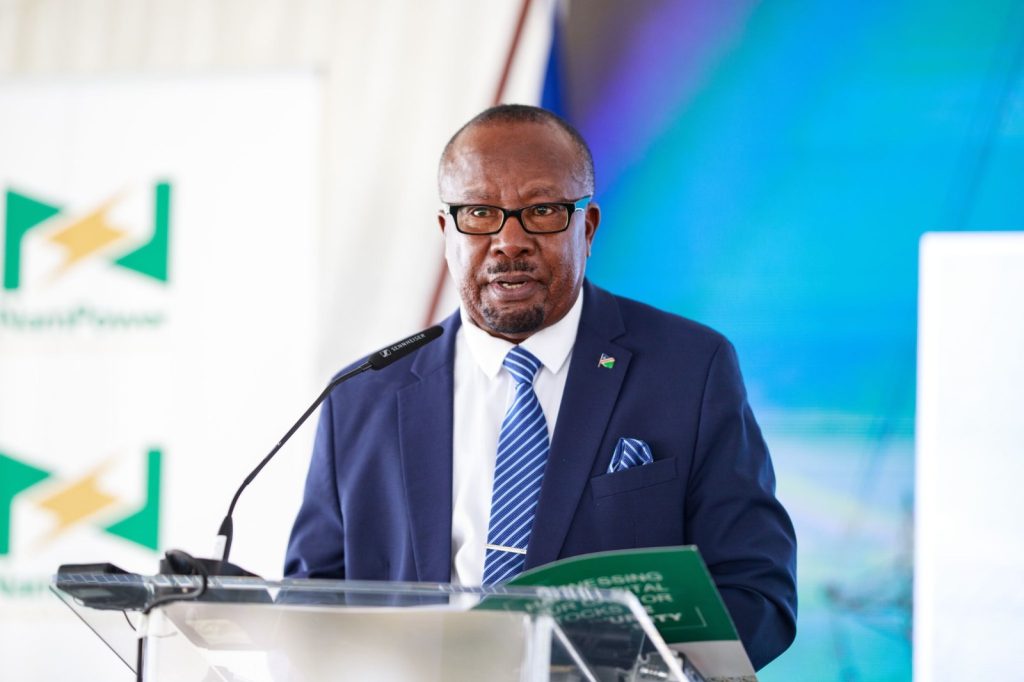
NamPower Managing Director Kahenge S. Haulofu said the investment has helped the utility maintain average system reliability of more than 99%, despite regional electricity supply constraints and Namibia’s continued reliance on imports.
NamPower’s generation capacity increased from 394.6MW in 1996 to 563.5MW in 2026, supported by investments in new generation and upgrades to existing facilities.
The expansion included the commissioning of the 22.5MW Anixas Power Station in 2011, the addition of a fourth 92MW turbine at Ruacana Power Station in 2012, the 20MW Omburu photovoltaic power station in 2022 and the 54MW Anixas II Power Station in 2024.
At transmission level, Haulofu said NamPower’s network of lines at 132kV and above expanded from about 3,100 kilometres in 1998 to nearly 8,500 kilometres.
Namibia had no 400kV transmission lines in 1998, but has since developed almost 1,500 kilometres of 400kV infrastructure.
“Most of the growth came from building almost 1,500 kilometres of 400kV lines, which strengthened Namibia’s connection to the South African grid, and from roughly doubling the 220kV and 132kV networks to reach mines, towns and new load centres,” Haulofu said.
NamPower has also invested in digital infrastructure, establishing GridOnline in 2019 to provide open-access bulk connectivity services through its national fibre-optic network.
In 2025, the utility energised the Sekelduin Substation outside Swakopmund, which Haulofu described as the first fully digital substation in Africa.
The infrastructure expansion has been supported by growth in NamPower’s financial position. Haulofu said profit after tax increased from N$193 million in 1999 to N$1.4 billion in 2025, while the utility’s asset base grew from N$3.8 billion to N$58 billion over the period.
Cash generated from operations increased from N$308 million in 1999 to N$1.9 billion in 2025. Haulofu said NamPower currently has an operating profit of about N$1.3 billion and an asset base of N$59 billion.
He said financial discipline had strengthened NamPower’s ability to finance infrastructure projects and improved its credibility with commercial lenders and development finance institutions.
However, Namibia remains heavily dependent on imported electricity, with imports averaging about 50% of annual electricity requirements and rising to as much as 70% during dry years.
Haulofu said NamPower also faces pressure from the need to maintain cost-reflective tariffs while ensuring electricity remains affordable, as well as challenges related to customer debt and non-payment.
The utility’s Integrated Strategic Business Plan for 2026 to 2030 is expected to guide its response to these challenges, with security of electricity supply remaining a priority.
“As we look ahead, we commit to remain focused and steadfast as we have been over the past thirty years. Security of supply remains our priority and, with our new strategic plan, we are committed to ensuring the reliable supply of power,” Haulofu said.
NamPower said its expansion has also been accompanied by close to N$1 billion in social investment, including rural electrification, community development and academic and vocational training bursaries.
Its workforce increased from 781 employees in 1996 to 1,129 employees currently, including 295 women.
Director of Energy in the Ministry of Industries, Mines and Energy John Titus, meanwhile, called for faster electrification and greater consideration of decentralised systems and solar solutions in areas where extending the national grid may not be the quickest or most affordable option.
He urged NamPower to work with NORED, CENORED, Erongo RED, other electricity distributors and local authorities to compare the costs of grid connections with alternative electricity solutions.
“Bring surveys, designs and procurement to completion; then bring power to the household,” Titus said.
“A family cannot cook with a tender document.”