Namibia should avoid treating anticipated first-oil timelines as guaranteed and instead use the pre-production period to complete critical legal, fiscal and institutional reforms, the Bank of Namibia (BoN) has cautioned.
BoN Director of Research and Financial Sector Development Emma Haiyambo said petroleum projects remain vulnerable to delays and changing market conditions, making it important for the country to prepare its institutions without building expectations around a fixed production date.
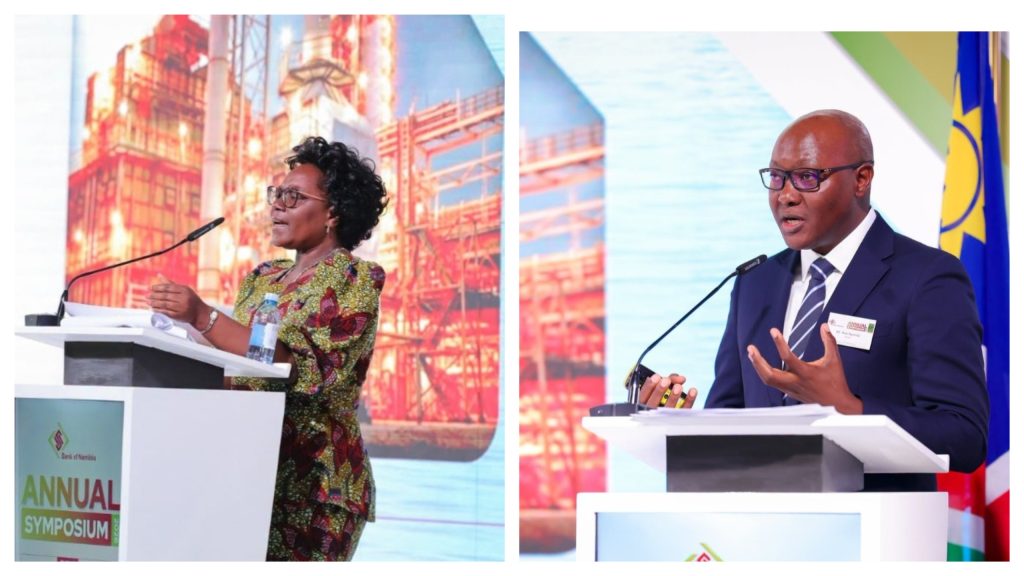
Presenting the central bank’s assessment of Namibia’s readiness for oil production at its 27th Annual Symposium on Thursday, Haiyambo said the economic benefits eventually derived from petroleum would depend heavily on decisions taken before production starts.
“Preparation is especially important because the benefits that the country will reap from this new industry will depend on whatever institutions we build before first oil and what we are capable of delivering,” she said.
BoN’s assessment found that while several petroleum-related laws and institutions are already in place, key frameworks remain unfinished.
These include the Petroleum Exploration and Production Amendment Bill and proposed sovereign wealth fund legislation.
“As indicated earlier, relevant legislation and some institutions are in place. However, our assessment revealed that key legal instruments remain under development while work on other things is also still ongoing,” Haiyambo said.
The central bank also identified petroleum tax administration, local content implementation and skills development as areas requiring further work before production.
Haiyambo said local content requirements could prove difficult to enforce without legislation.
“It is well and good to have the local content policy. However, if it is not legislated, it becomes difficult to enforce,” she said.
BoN also recommended specialised petroleum tax audits to strengthen revenue collection and mitigate risks associated with tax avoidance and profit shifting.
On skills, Haiyambo said Namibia should begin developing the technical capabilities required by the petroleum industry now, rather than waiting for production.
“You can’t wait until first production for you to assess and train for what is needed,” she said.
The central bank further warned that competition for specialised workers could intensify as petroleum companies offer higher salaries, potentially drawing skilled employees from government and other sectors.
BoN also wants a coordinated communication strategy to manage public expectations around the petroleum industry, including employment opportunities and anticipated production.
“What we have understood is that currently there is nothing around that ongoing. And we really encourage that we organise ourselves and that we come up with a communication strategy,” Haiyambo said.
Petroleum Authority of Uganda Director of Development and Production Alex Nyombi backed the call for early preparation, saying Uganda’s experience demonstrated the importance of developing institutional capacity, technical skills and petroleum data-management systems before production.
“It’s very, very important to communicate, to communicate, to communicate. You manage expectations as well. You don’t want a situation where everyone thinks, well, because I’m Namibian, I’m entitled to a job there,” Nyombi said.
He said specialised training, practical experience and internationally recognised certifications would be important if Namibians are to participate in technical areas of the petroleum industry.