Serval Resources Plc has identified new copper mineralisation more than one kilometre from previously explored prospects at its Kaoko Basin project in north-western Namibia, potentially expanding the strike length and scale of its mineralised systems ahead of maiden drilling later this year.
The AIM-listed explorer said geological mapping across Exclusive Prospecting Licence (EPL) 7081 identified new surface copper occurrences while confirming mineralisation at the existing Omatapati and Otjozongombe prospects.
The programme covered approximately 80 kilometres of traverses, with 2,063 geological recordings and 114 grab samples collected. Of these, 68 samples were selected for laboratory geochemical analysis.
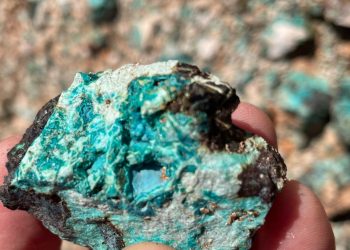
Preliminary readings using a handheld portable X-ray fluorescence (pXRF) analyser returned copper grades ranging from 7.5% to 56.17%, including additional readings of up to 33.36% and 19.03%.
The highest reading of 56.17% copper was recorded from a siltstone sample containing quartz veins.
Serval cautioned that the pXRF readings are preliminary spot analyses of surface samples and are not representative of the average grade of a potential mineral resource.
Selected samples have been submitted to ALS Laboratories for preparation, homogenisation and further analysis, with results expected in October 2026.
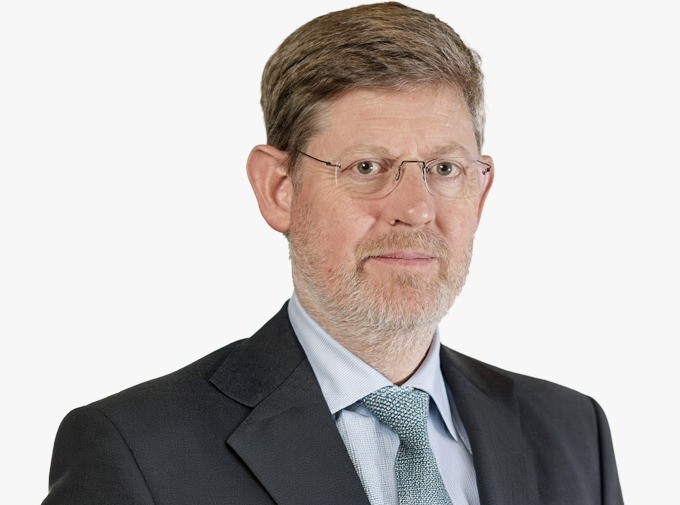
Serval Chief Executive Officer Robin Birchall said the mapping results had strengthened the company’s understanding of the mineralised systems across EPL 7081.
“The geological mapping programme on EPL 7081 has been an important part of this, as evidenced by these exciting results which have confirmed both existing and new Cu mineralisation, with high-grade material from surface,” Birchall said.
“As demonstrated by others, this region is shaping up to be one of Africa’s most exciting new copper frontiers and our focus now is to continue to delineate the mineralised systems within our licence areas, which will include our maiden drilling programme in Q4 this year.”
The mapping programme identified several styles of copper mineralisation, including quartz and calcite vein-hosted mineralisation, disseminated mineralisation in siltstone and fracture-fill mineralisation in quartzite and dolomite.
It also identified a new occurrence hosted in quartzites and sandstones of the Nosib Group.
Serval said the new occurrences, including mineralisation found more than one kilometre from previously explored prospects, could increase the potential strike length of the copper systems and provide additional targets for exploration.
The company plans further geophysical surveys and soil sampling during the remainder of 2026 before beginning diamond drilling in the fourth quarter.
The maiden drilling programme will test the orientation, grade and continuity of the surface mineralisation at depth.
Successful drilling could pave the way for a maiden mineral resource estimation programme in 2027, subject to additional funding.
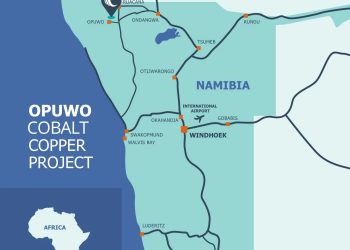
Serval’s Kaoko Basin project comprises four exploration licences covering approximately 789 square kilometres in north-western Namibia.