Namibia will not seek to localise every component of its emerging oil and gas industry from the outset, with the government opting for a phased approach that allows local participation to deepen as offshore projects in the Orange Basin advance towards development.
Minister of Industries, Mines and Energy Modestus Amutse said the government recognises that Namibia currently lacks the capacity to immediately supply all the goods, services and expertise required by a deep-water petroleum industry.
“We must approach this pragmatically. Namibia will not localise every component from the first day, and it should not pretend that it can,” Amutse said during the Offshore Northern Seas programme in Norway.
He said local participation must, however, increase as the industry matures, with investment in skills and institutions beginning before the country reaches first oil.
The position comes as Namibia prepares to implement its recently approved National Upstream Petroleum Local Content Policy, which seeks to increase Namibian participation through employment, local procurement, enterprise development, skills development and technology transfer.
Amutse said the government wants petroleum development to generate economic benefits beyond taxes and royalties, including the development of Namibian businesses, skills, ports, infrastructure and public services.
“The investor must see a competitive project. Namibia must see opportunity beyond taxes and royalties. And the Namibian child must ultimately see a difference in education, infrastructure, energy access and economic possibility,” he said.
The minister said building a domestic petroleum ecosystem will require investment in marine and logistics services, engineering capacity, environmental science, training and research, as well as reliable energy, water and transport infrastructure.
His comments come as discoveries including Graff, Venus, Jonker and Mopane have established Namibia as an emerging deep-water petroleum province, with projects now at different stages of exploration, appraisal and potential development.
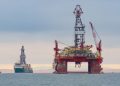
At Venus, partners have outlined a development concept based on a floating production system with capacity of about 160,000 barrels per day and are working towards a potential final investment decision. Further exploration and appraisal is also planned around Mopane.
Amutse said Namibia must balance its push for greater domestic participation with the commercial requirements of investors, noting that offshore developments are capital-intensive projects competing globally for funding.
“Government cannot command geology to become commercial or ask capital to ignore economics. Our framework must protect the national interest while allowing responsible investors to earn a competitive return,” he said.
He said the long-term success of the Orange Basin will ultimately be measured not only by oil production, but by whether the industry builds domestic capability, creates competitive Namibian businesses and strengthens the wider economy.
“The discoveries have given us an opportunity, not an entitlement,” Amutse said. “Investability must still be earned through competence, consistency and trust.”