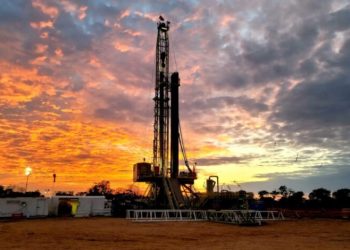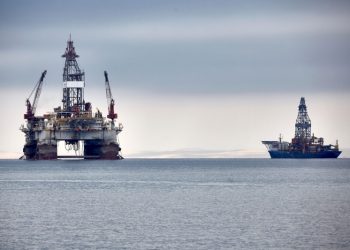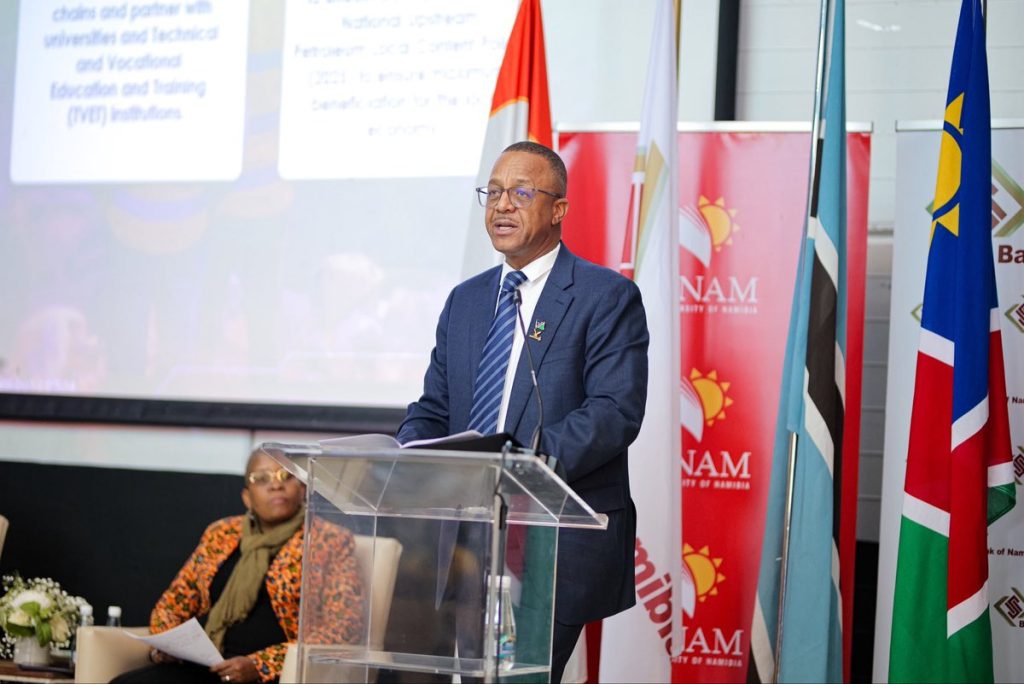
Namibia has drilled about 50 oil and gas exploration and appraisal wells to date, with the country’s petroleum resources estimated at around 10 billion barrels, Bank of Namibia Governor Ebson Uanguta has said.
Uanguta said about one-third of the estimated resources could be commercially recoverable, highlighting the difference between the volume of petroleum identified geologically and the amount that can ultimately be extracted economically.
Uanguta told a public lecture at the University of Namibia that major offshore discoveries since 2022 had positioned oil and gas as an increasingly important part of Namibia’s future economic outlook.
“Oil exploration in Namibia dates back to the 1970s, with Kudu Gas discovered in 1974. Major discoveries followed from 2022 through exploration activities involving Shell, TotalEnergies, Galp Energia and Rhino Resources,” he said.
Uanguta said the scale of the emerging industry would require significant investment in infrastructure, skills and domestic supplier capacity if Namibia is to capture greater economic benefits from petroleum production.
He pointed to the Venus discovery as an indication of the scale of investment involved in developing Namibia’s offshore resources.
According to Uanguta, Venus is located approximately 250 kilometres offshore and about three kilometres beneath the seabed.
He said development would involve wells connected through subsea pipelines to a stationary offshore production vessel operating continuously for decades.
Uanguta put the potential investment required for the Venus development at about US$17 billion, exceeding Namibia’s estimated annual economic output of between US$14 billion and US$15 billion.
“The Venus development represented an investment of about US$17 billion for one block, compared with Namibia’s economy of approximately US$14 billion to US$15 billion. Peak production was put at 150,000 barrels per day,” Uanguta said.
At an illustrative oil price of US$88 per barrel, production of 150,000 barrels per day would translate into gross oil sales of about US$13.2 million per day before costs, taxes and other deductions.
Uanguta said offshore production would also create sustained demand for goods and services from the domestic economy.
A production vessel could accommodate at least 200 people, operate 365 days a year and potentially remain in operation for about 35 years, creating long-term demand for food, logistics and other support services.
Uanguta said petroleum exploration had already affected Namibia’s macroeconomic position, with net foreign direct investment inflows reaching record levels since 2022.
He said inflows could increase further as petroleum projects move from exploration into development and eventually production.
The Governor also linked foreign investment in petroleum exploration and development to Namibia’s external accounts, saying the inflows were contributing to the country’s current-account position.
However, he said Namibia needed to build local capacity before production starts, particularly through skills development and preparing domestic companies to supply goods and services to the industry.
Uanguta said the country should pursue petroleum development alongside its renewable energy potential rather than treating the two as competing opportunities.
He said Namibia’s strong solar and wind resources could provide another long-term source of economic activity, with solar installations potentially generating significantly more electricity than comparable systems in many European countries.
Uanguta said Namibia’s broader challenge was to convert its natural-resource wealth into productive capacity, financial assets, domestic industries and skills that could support economic growth beyond the life of individual resource projects.