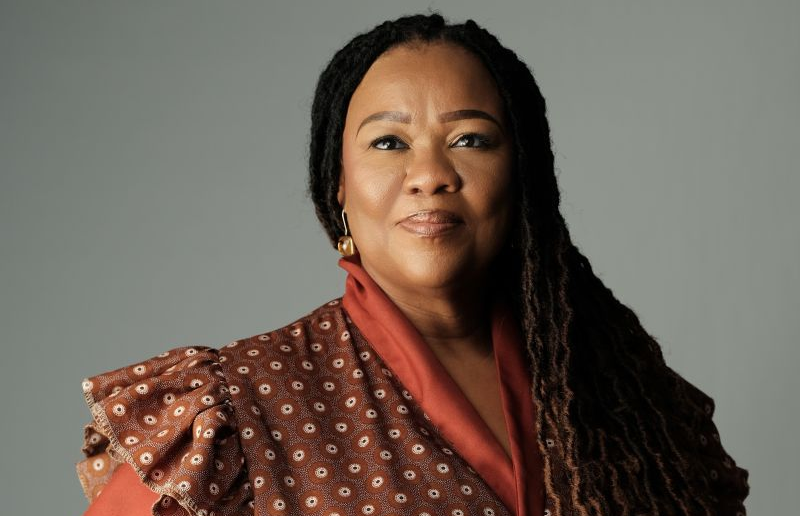
By Zenzi N. Awases
Mining is not new to Namibia. Long before the first formal mining ventures of the nineteenth century, communities were already working the land beneath this territory. Archaeological evidence of copper smelting near present-day Matchless Mine, west of Windhoek, places
Namibia’s mining history at more than four centuries old.
For generations, this country’s minerals have shaped its economy, politics, landscapes and the lives of its people, creating wealth and expertise, but also exposing the familiar tensions of an extractive economy: who owns the resource, who makes the decisions, and who ultimately benefits.
That is the context in which we must honestly assess the place of women in Namibia’s mining sector today. Not against a blank slate, but against a history more than four centuries deep; one that has had more than enough time to get inclusion right and has not.
Visible, but Not Yet Powerful
The progress is real. More women are sitting at conference tables, working in mining houses and holding positions in regulatory bodies than at any point in Namibia’s recorded mining history. Women are increasingly visible in geology, engineering, environmental management, finance and executive leadership.
Alongside this, advocacy structures have emerged to accelerate and sustain that momentum.
The Women in Mining Association of Namibia, which I co-founded with six other women in 2017, runs an active mentorship and coaching programme connecting emerging professionals with experienced leaders across the sector.
At continental level, the Association of Women in Mining in Africa brings together national associations across Africa’s five regions. Institution-building of this kind requires sustained energy, volunteer labour and the constant negotiation of credibility in spaces not designed with women in mind.
But visibility is not power. And participation is not ownership. This is the distinction the industry has not yet been willing to confront directly.
The Structural Gap
Women in mining are often more visible at the lower and supporting levels of the value chain than in asset ownership, financial control, board governance and technical decision-making.
This is not accidental. It reflects how entry points are structured, how capital flows, how licences are allocated, and who is assumed by default to be the competent actor in the room.
The artisanal and small-scale mining sector makes this tension particularly visible. Women make up a meaningful share of the ASM workforce yet face recurring barriers to land, licences, capital, equipment and formal networks. A woman without collateral cannot access finance. A woman with caregiving responsibilities cannot always travel repeatedly to licensing offices.
Formalisation should be a pathway to dignity and economic participation. It should not become another gate through which women are unable to pass.
We cannot keep celebrating the number of women entering the sector without asking: at what level, on what terms, and with what prospect of advancement?
A Once-in-a-Generation Moment…and Its Risks
Namibia sits at a remarkable juncture. The global energy transition has redrawn the map of strategic value, and Namibia’s lithium, uranium, graphite, copper, manganese and rare earth potential have placed the country at the centre of an increasingly important global conversation.
The language has changed: critical minerals, just transition, responsible sourcing, beneficiation and local value addition. However, the underlying logic of extraction and export, if left uninterrupted, remains familiar.
The architecture of governance, participation and ownership being built around Namibia’s critical-minerals sector today will determine who benefits for decades to come. If women are brought in only as workers and beneficiaries, rather than as owners, licence holders, technical leads, investors and board members, then a generation from now we may find we repeated, in the language of sustainability, the exclusions that defined the centuries before.
The critical-minerals moment is not a gift. It is a test of whether we have learned anything.
What Accountability Looks Like
Meaningful inclusion requires specificity. It requires more than broad commitments to “empower women in mining” — a phrase that has appeared in enough policy documents to have lost much of its weight. It requires traceable, time-bound and enforceable provisions.
That means procurement frameworks with gender-responsive targets that have teeth. It means financing instruments designed to reach women-led enterprises, including in ASM. It means corporate-governance expectations that go beyond tokenism. It means accessible technical training, sponsorship and mentorship pipelines funded at a scale commensurate with the ambition.
Several of these interventions already exist in nascent form. What they lack is the political will to prioritise them.
A Debt Worth Naming
For generations, women’s labour has sustained mining economies: through direct mineral work, processing, trading, care work, household labour and keeping communities functioning around mining operations. Much of that contribution has been invisible, undervalued or treated as peripheral to the “real” work of mining.
Adding more women to the workforce does not settle that debt. Settling it requires a reckoning with who has the right to shape this industry, not merely participate in it.
As Namibia enters what may be its most consequential mining decade yet, that reckoning cannot be deferred. The headcount will not be enough. The question is who holds the count…and who decides what it means.
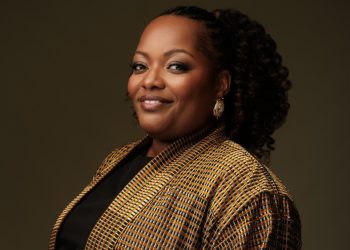
*Zenzi N. Awases is a geologist and mining-sector strategist with more than two decades of experience in the industry. She is the Co-Founder and Chairperson of the Women in Mining Association of Namibia (WiMAN) and President of the Association of Women in Mining in Africa (AWIMA).