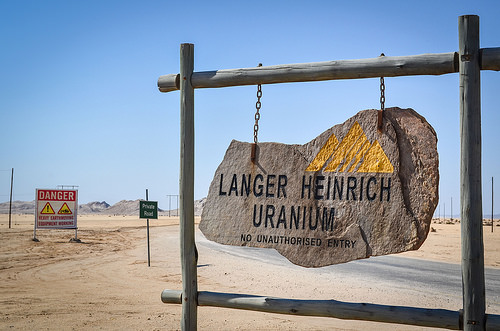
Paladin Energy will invest between N$477.9 million (US$29 million) and N$576.8 million (US$35 million) in its Langer Heinrich Mine (LHM) during the 2027 financial year as it shifts from ramp-up to long-term production and operational optimisation.
The capital expenditure programme follows the successful completion of the mine’s operational ramp-up during the June 2026 quarter and will focus on infrastructure upgrades, resource development and plant optimisation.
According to the company, the investment will fund the design and construction of new tailings storage facilities, process improvement studies and infill drilling aimed at refining the mine’s orebody model. The budget will also cover selected capital exploration activities deferred from FY2026.
“LHM capital expenditure is expected to be between US$29 million and US$35 million for FY2027. Key expenditure items include tailings storage facilities design and construction, process improvement studies and infill drilling. FY2027 capital expenditure will also include the completion of selected capital exploration activities deferred from FY2026,” Paladin said.
The company expects uranium oxide production to range between 5.1 million and 5.6 million pounds during FY2027, although quarterly output is expected to fluctuate due to scheduled maintenance shutdowns in the September and December 2026 quarters.
Production is forecast to strengthen during the second half of the financial year as mining advances into higher-grade primary ore.
Following the depletion of the MG3 ore stockpile during FY2026, all material processed in FY2027 will be sourced directly from open-pit mining operations, resulting in longer haul distances. Overburden removal and waste stripping will continue throughout the year to provide access to future mining areas.
Paladin said it would continue reporting capitalised stripping costs associated with overburden removal, waste stripping and the development of low-grade ore stockpiles on a quarterly basis, with these costs excluded from production costs.
The company expects uranium oxide sales to range between 4.8 million and 5.3 million pounds, supplying customers across North America, Europe and Asia under long-term contracts.
The sales guidance incorporates the planned repayment of part of the company’s outstanding 400,000-pound uranium product loan during FY2027.
Direct production costs are forecast at US$44 to US$48 per pound (approximately N$725.12 to N$791.04 per pound), with costs expected to remain near the upper end of the range during the first half of the financial year due to lower production volumes and planned maintenance activities.