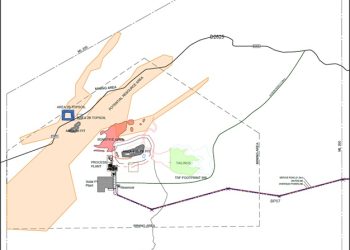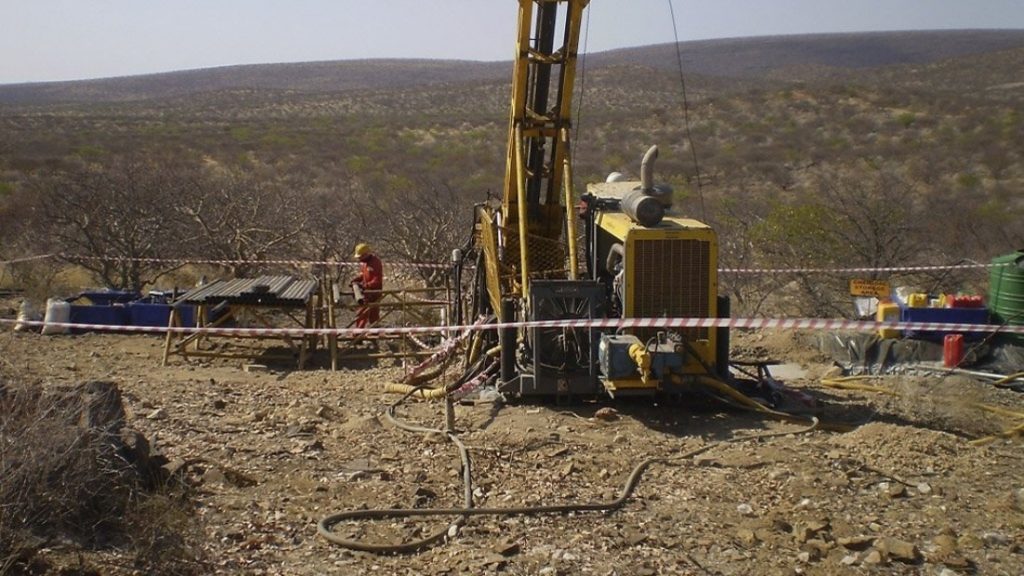
Namibia Critical Metals has secured approval for approximately N$129.14 million (C$11 million) in additional funding to advance the Definitive Feasibility Study (DFS) for its Lofdal Heavy Rare Earth Project in north-western Namibia.
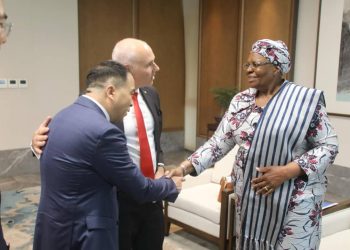
The funding was approved by the Joint Management Committee (JMC), which oversees the project through the partnership between Namibia Critical Metals, the Japan Organization for Metals and Energy Security (JOGMEC) and Toyota Tsusho.
The approval also paves the way for full execution of the expanded feasibility study.
Namibia Critical Metals President and Chief Executive Officer Darrin Campbell said the company has awarded its first major metallurgical and geometallurgical contracts to SGS Canada Inc., a global leader in metallurgical testing and process development, as part of the next phase of the study.
The work will generate the engineering and operational data required to finalise plant design, optimise processing and support future project financing.
“The approval of approximately C$11 million in additional DFS funding enables a comprehensive metallurgical development programme that will substantially de-risk the processing component of the project while generating the engineering data required for detailed design and project financing,” Campbell said.
He said a key objective of the expanded study is to demonstrate the production of higher-value rare earth products within Namibia, rather than exporting mineral concentrates for processing abroad.
The programme will assess the production of separate Light Rare Earth Carbonate (LREC) and Heavy Rare Earth Carbonate (HREC) products through integrated hydrometallurgical processing, supporting Namibia’s ambitions to expand local mineral beneficiation and industrial development.
Campbell said the expanded programme moves the project beyond conventional concentrate production towards higher-value rare earth products, while supporting Namibia’s strategy to develop downstream critical minerals industries and strengthen secure, diversified supply chains for Japan and other allied economies.
“Today’s announcement represents far more than the award of technical contracts. It marks the commencement of the next major execution phase of the Lofdal Definitive Feasibility Study for the expanded Lofdal 2B-4 Project and reflects the continued commitment of NCMI, JOGMEC and Toyota Tsusho to advancing one of the world’s most strategically important heavy rare earth projects,” he said.
The newly approved work programme includes a pilot-scale flotation campaign using approximately 30 tonnes of representative ore, a continuous hydrometallurgical pilot plant, laboratory and pilot-scale rare earth separation testing, and an extensive geometallurgical programme involving 98 representative samples from across the deposit.
The programme is expected to validate the project’s processing flowsheet, optimise recoveries and operating costs, generate engineering design criteria for the proposed processing plant, refine mine planning models, and support amendments to environmental and other regulatory permits.
The Lofdal Heavy Rare Earth Project is regarded as one of the few advanced heavy rare earth projects globally capable of supplying critical minerals such as dysprosium, terbium and yttrium, which are essential for electric vehicles, renewable energy technologies, advanced electronics and defence applications.
Namibia Critical Metals currently owns a 95% stake in the project, with the remaining 5% held for the benefit of Historically Disadvantaged Namibians.
JOGMEC has already earned a 40% interest in the project after completing the second phase of its earn-in agreement through an investment of N$117.4 million (C$10 million).
To date, total funding committed to the project stands at N$234.48 million (C$19.97 million). JOGMEC is required to invest a total of N$270.02 million (C$23 million) to increase its interest to 50%.