Namibia’s Lofdal rare earth project has attracted approximately US$30 million (about N$495 million) in investment over the past 15 years, funding exploration, drilling and metallurgical studies that have defined a 50-million-tonne measured and indicated resource.
Gecko Group General Manager for Exploration and Namibia Critical Metals Vice President for Exploration, Rainer Almes, said the investment has supported extensive technical work, including the drilling of 400 boreholes, more than a decade of metallurgical test work and successful pilot-scale processing trials as the project advances through its definitive feasibility study.
“We spent 15 years on it from our early prospecting work through to now 400 boreholes. We have now 50 million tonnes of resources in the measured and indicated resource, positive pilot-scale processing test work and processing test work for more than 10 years and US$30 million probably spent on that,” Almes said at a recent event.
He said developing a rare earth project requires substantial capital and years of technical studies, stressing that discovering a deposit is only the first step towards determining whether it can be mined economically.
“There’s no freebie by finding a rare earth deposit. It will cost you years and lots and lots of hundreds of millions of Namibia dollars to bring a project forward into a feasibility stage. Lofdal plays in a completely different game as one of two hard rock heavy rare earth deposits,” Almes said.
According to Almes, the project’s mineralogy is critical to its commercial viability, as it determines whether the rare earth elements can be extracted economically.
“The mineralogy is the key. You can have a rare earth deposit, but if the mineralogy is not right, you will not be able to process it economically. The processing test work is very important because you need to understand what you have in the ground and how you can extract those elements,” he said.
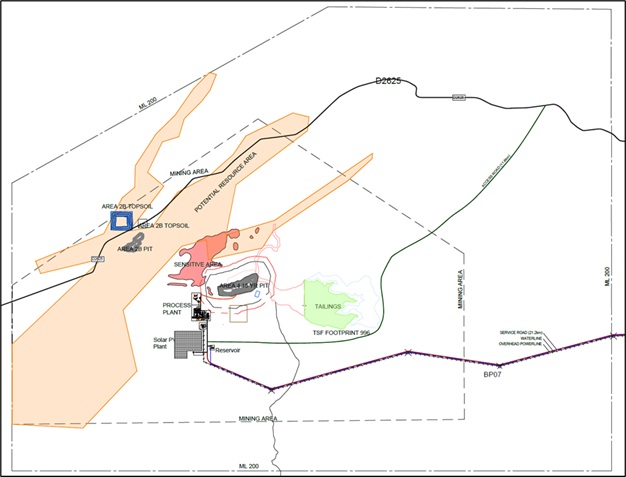
The Lofdal project is currently undergoing a definitive feasibility study following more than 10 years of resource definition and metallurgical testing aimed at confirming the technical and economic viability of a future mining operation.
Earlier this year, Namibia Critical Metals filed an independent NI 43-101 pre-feasibility study for the Lofdal Heavy Rare Earths Project.
The study confirmed the strong potential of the Lofdal 2B-4 deposit to produce high-value heavy rare earth elements, particularly dysprosium, terbium and yttrium, which are critical inputs in the manufacture of permanent magnets used in electric vehicles, wind turbines and advanced electronic technologies.
Prepared independently by SGS Bateman (Pty) Ltd in accordance with NI 43-101 disclosure standards, the study was overseen by qualified person Joseph Keane.
Namibia Critical Metals said the report reflects extensive technical work undertaken by an international team of specialists.