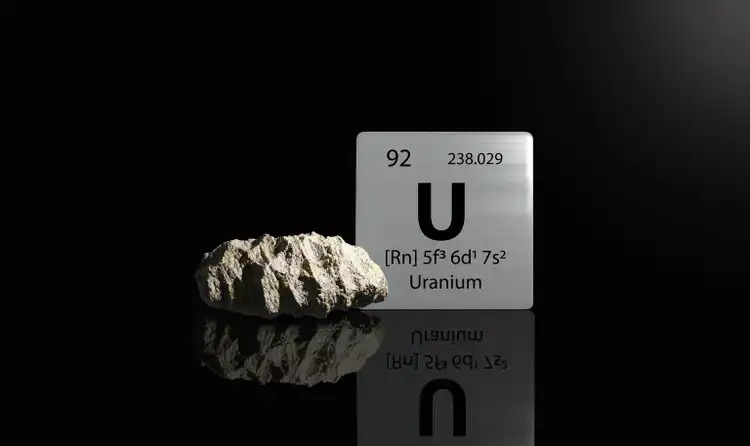
Namibia’s proposed Nuclear Bill is set to place value addition at the centre of the country’s uranium industry, marking a significant shift from the current legal framework that largely limits the country to exporting raw uranium.
The proposed legislation, which is currently undergoing nationwide public consultations, aims to replace the Atomic Energy and Radiation Protection Act of 2005 and establish a modern regulatory framework for the development and oversight of nuclear activities in Namibia.
According to Deputy Director of the National Radiation Protection Authority in the Ministry of Health and Social Services, Joseph Eiman, the bill is intended to ensure Namibia derives greater economic benefits from its position as one of the world’s leading uranium producers.
“We are currently the third or fourth largest producer of uranium in the world, which is something I think we should be very proud of. Because of this, we want to bring value addition to that product. Currently, we are exporting it exactly as it is produced; it is simply packed into drums and shipped out of the country. We believe that we, as a nation, can benefit much more from it through value addition,” he said.
Eiman said the proposed legislation would create opportunities for Namibia to expand its role in the nuclear value chain, while strengthening the country’s regulatory framework for nuclear activities.
The bill also seeks to enhance nuclear safety, security and safeguards, while introducing a nuclear liability and insurance framework that is absent from the current legislation.
Senior Legal Officer in the Office of the Attorney General, Hilma Naimbale, said the proposed law would establish three new institutions to oversee the sector.
These include the Nuclear Commission of Namibia, which will be responsible for policy oversight, coordination and governance; the Nuclear Institute of Namibia, which will focus on research, development and the promotion of peaceful nuclear technologies; and the Radiation and Nuclear Regulatory Authority of Namibia, which will serve as the country’s primary licensing and regulatory body.
“The proposed bill expands the scope of our regulatory framework for nuclear activities in the country by establishing three key institutions: the Nuclear Commission of Namibia, the Nuclear Institute of Namibia, and the Radiation and Nuclear Regulatory Authority of Namibia. In contrast, the current law only establishes two bodies, namely the Atomic Energy Board, which serves as an advisory body to the government on nuclear-related activities, and the National Radiation Protection Authority, which acts as our current regulatory body,” she said.
The proposed legislation also broadens the scope of regulation to include naturally occurring radioactive materials and cosmic radiation, areas that currently have limited legislative oversight.
Naimbale emphasised that the bill is focused exclusively on the peaceful use of nuclear technology and does not provide for the development of nuclear weapons.
Instead, she said, the legislation is intended to strengthen the protection of people and the environment from the harmful effects of radiation while creating a framework that supports the safe use of nuclear science in sectors such as healthcare, agriculture, mining and energy.