Offshore gas developments such as Namibia’s Kudu Gas Field face a more complex and longer route to commercialisation than oil projects due to major infrastructure requirements and uncertainty around long-term domestic demand, according to energy consultancy Wood Mackenzie.
Research Director for Sub-Saharan Africa Upstream at Wood Mackenzie, Ian Thom, said offshore gas projects require significantly more coordination across transport, processing and power infrastructure before production can become commercially viable.
“When we look at oil and gas, gas is often treated in the same way as oil in early discussions, but the reality is quite different. Gas has a far longer and more complex pathway to market. It comes with more constraints, more infrastructure requirements, and more coordination challenges across the value chain,” Thom told a recent energy conference in Namibia.
He said the challenge becomes even greater when offshore gas is intended for domestic consumption rather than export markets.
“If the intention is domestic utilisation, the complexity increases significantly. You require a pipeline to shore, onshore processing facilities, and then integration into industrial and power demand. Even then, the power market itself must be underpinned by reliable, paying customers. So every part of the chain needs to function and align across multiple stakeholders,” Thom said.
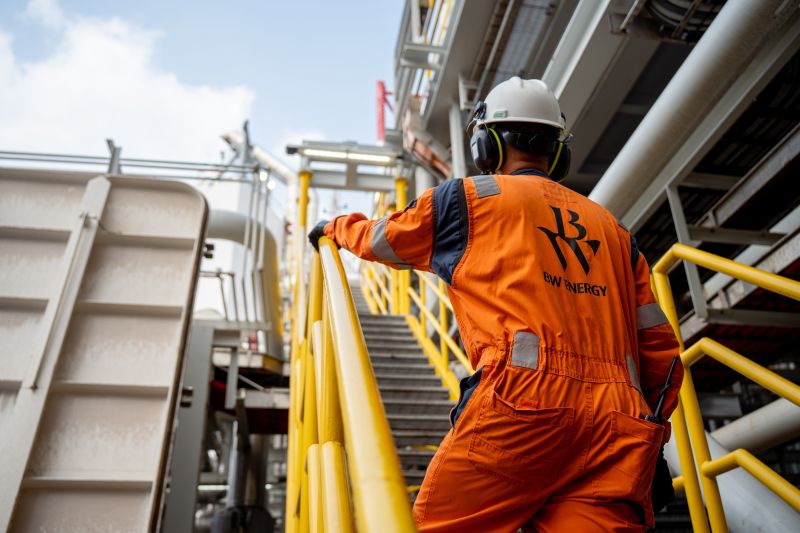
According to Thom, the Kudu development would require a pipeline of roughly 200 kilometres to transport gas onshore, with project operator BW Energy expected to carry much of the development burden.
He said global and African experience shows that offshore gas developments rarely create domestic gas markets on their own, particularly in deepwater environments located far from major population or industrial centres.
Thom said Wood Mackenzie’s analysis of around 15 African offshore gas-producing countries found that eight initially built domestic demand through smaller onshore or nearshore gas developments before expanding into larger offshore production.
In another five cases, development was driven mainly by liquefied natural gas (LNG) export projects rather than domestic market creation.
He said only a limited number of offshore gas developments globally have successfully established domestic gas markets directly from large offshore discoveries.
“Kudu does not fall within the more favourable conditions seen in some offshore projects located close to shore or near large population centres,” Thom said.
He said one possible route for Kudu could involve smaller-scale associated gas developments that gradually help establish infrastructure and domestic demand.
Thom added that oil developments elsewhere in Namibia’s offshore basins could also play an important sequencing role by generating early government revenues needed to support infrastructure investment.
He said infrastructure such as pipelines, ports and electricity systems often require earlier cash flows from oil projects before large-scale gas commercialisation becomes viable.
“From our perspective, the most important point is that gas commercialisation offshore is not a single-step process. It is usually a staged evolution, often starting with oil or smaller gas projects, then progressing into broader infrastructure-led market development,” Thom said.
He said Kudu should therefore be viewed within a long-term development framework where infrastructure readiness, market demand and project sequencing will determine commercial success.
The comments come as the Kudu project remains in the late pre-development phase, with appraisal drilling and Front-End Engineering and Design (FEED) work currently underway.
BW Energy is targeting completion of the field development plan around mid-2026, with a final investment decision expected later this year.
The company aims to begin gas-to-power production near Lüderitz around 2027, initially generating between 400MW and 420MW before potentially expanding to approximately 800MW.