Koryx Copper says new drilling results from its Haib Copper Project continue to confirm the scale and consistency of copper mineralisation at the project as the company advances towards a prefeasibility study planned for completion before the end of 2026.
The company announced assay results from 17 drill holes covering 5,252 metres as part of its 2026 exploration and project development programme at the wholly-owned Haib project in southern Namibia.
Koryx Copper President and Chief Executive Officer Heye Daun said the latest results reinforced confidence in the project’s resource quality and long-term economics.
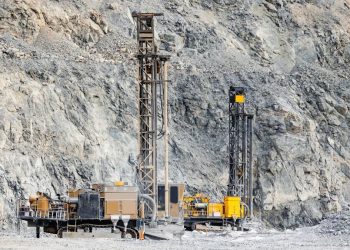
“Now operating with 14 drill rigs on site, our geological team has delivered another excellent set of drill results. These 17 drill holes demonstrate once again the highly consistent nature of the copper mineralization with significant molybdenum and gold byproduct credits and the potential to incrementally increase the average mineral resource grade,” Daun said.
“We recently published an updated mineral resource estimate (“MRE”) which demonstrated higher grades, lower stripping and a large increase in overall contained copper. This updated MRE plus an enhanced process flow sheet will be incorporated and published in the form of the planned Pre-feasibility Study (PFS) before the end of this year.”
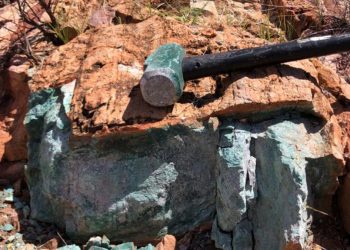
Haib is an advanced open-pit copper-molybdenum-gold porphyry project with a small oxide cap. The company said the project is designed around a low-risk open pit crushing, milling and flotation process.
Koryx said the project is being developed as a scalable, long-life and low-cost operation with an envisaged average annual copper production rate of 92,000 tonnes in concentrate over a 24-year mine life.
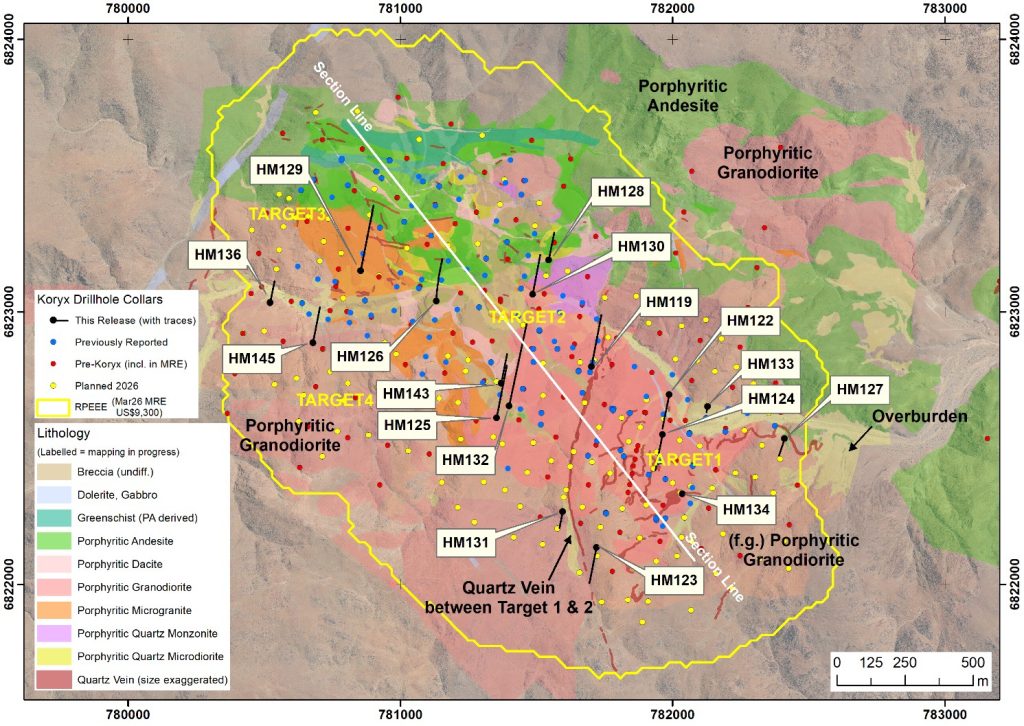
Among the latest results, drill hole HM123 confirmed a southward extension of high-grade copper mineralisation around 130 metres beyond the current resource model, while also intersecting a deeper high-grade zone more than 200 metres outside the current 0.25% grade shell.
The company said the deeper zone had not been identified in previous drilling and would require further drilling to determine its orientation and full resource implications.
Other notable intersections included HM127, which confirmed an eastward extension of high-grade structurally controlled copper mineralisation by approximately 50 metres beyond previously defined zones.
In Target Area 2, drill hole HM132 returned strong copper and molybdenum mineralisation, with elevated molybdenum grades significantly improving copper equivalent values.
Koryx also highlighted drill hole HM143, which intersected extensive shallow molybdenum mineralisation averaging 250ppm over 226 metres from surface, including 18 metres grading 945ppm molybdenum.
The company said the results confirmed a shallow, laterally extensive and well-defined molybdenum zone along the southern margin of Target Area 2 that could hold economic significance when considered on a copper equivalent basis.
In Target Area 3, drill hole HM129 intersected strong copper mineralisation with elevated molybdenum grades at depth, alongside sporadic tungsten mineralisation exceeding 400ppm and gold values of up to 0.65g/t.
Koryx said more than 120,000 metres of drilling has been completed at Haib since the 1970s through exploration campaigns led by companies including Rio Tinto, Teck Resources and Falconbridge.
The company said additional studies are underway to position Haib as a low-risk, low-cost and long-life sulphide flotation copper-molybdenum-gold project, with potential for additional production through heap leaching.
Koryx Copper is focused on advancing the Haib project while also building a portfolio of copper exploration licences in Zambia.