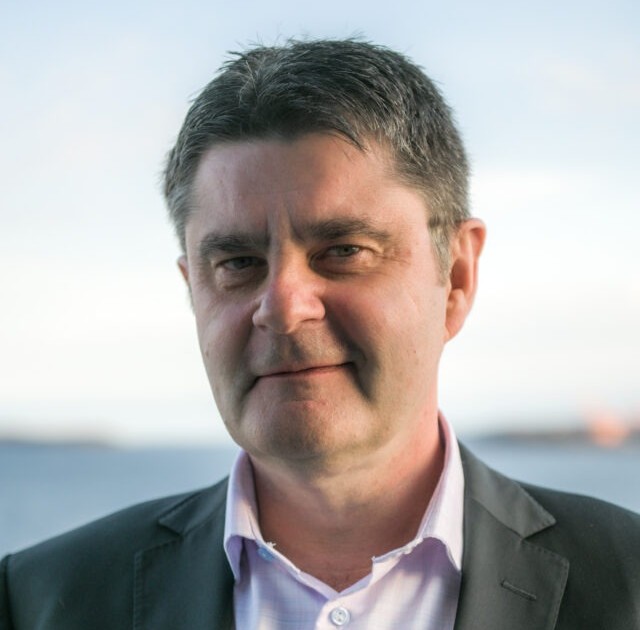
Namibia Critical Metals is stepping up drilling and technical studies at its Lofdal rare earth project as it advances its definitive feasibility study (DFS), with plans to expand resources, test deeper mineralisation and assess a potential shift from open-pit to underground mining to improve long-term cost efficiency.
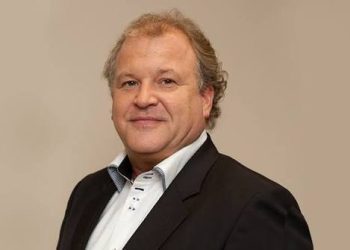
Chief Executive Officer Darren Campbell said the DFS is targeted for completion in the second quarter of 2027. Planned work includes exploration drilling between existing resource areas, resource expansion to extend the mine life, and deep drilling of up to 800 metres to assess mineralisation at depth.
“We are targeting the second quarter of 2027 to complete the DFS. This year, we are carrying out exploration drilling in Area 5, between our two established resources, and resource drilling in Area 2B to extend the mine life. Crucially, we are undertaking our first deep drilling at Area 4,” he said.
“We have drilled 56,000 metres to date, but only to depths of 300 to 350 metres. We are now drilling to 800 metres to confirm whether the resource continues at depth. We are also considering a scoping study to transition from open-pit to underground mining at Area 4 to reduce the strip ratio and optimise costs,” Campbell added.
The update follows a prefeasibility study (PFS) released in January, which outlines a 13-year mine life and initial capital expenditure of just under US$350 million, including contingency.
The study estimates a pre-tax net present value (NPV) of about US$390 million and US$275 million after tax under base-case pricing assumptions. Under a higher-price scenario, the after-tax NPV rises to approximately US$750 million, with an internal rate of return of about 35%.
Unlike most rare earth projects that focus on volume, Lofdal is characterised by high-value output. The deposit is dominated by heavy rare earth elements such as dysprosium, terbium and yttrium, with only about eight percent of its basket made up of neodymium and praseodymium (NdPr).
These elements are in growing demand for use in advanced technologies, including defence, aerospace and clean energy systems.
Campbell said metallurgical work remains a key focus, particularly given the complexity of processing xenotime-type deposits such as Lofdal.
The company has spent several years refining its processing flowsheet in collaboration with SGS and has recently strengthened its technical team with the appointment of a new vice president of metallurgy.
Ongoing test work will also support product quality optimisation, including the management of impurities to meet customer requirements.
“Our project is strongly weighted towards heavy rare earths. NdPr makes up only about eight percent of our basket. We are dominated by dysprosium, terbium and yttrium. Yttrium has emerged as a significant value driver in most heavy rare earth projects. In the past, Chinese spot prices for yttrium ranged between US$10 and US$20 per kilogram,” he said.
He added that global rare earth markets are undergoing a structural shift, with a widening price gap between Chinese and non-Chinese supply.
Contract prices for key elements such as dysprosium, terbium and particularly yttrium have increased significantly outside China, driven by export restrictions and supply constraints.
Campbell said Lofdal is well positioned to benefit from these trends, with the potential to produce around 120 tonnes of dysprosium, 25 tonnes of terbium and approximately 800 tonnes of yttrium per year.