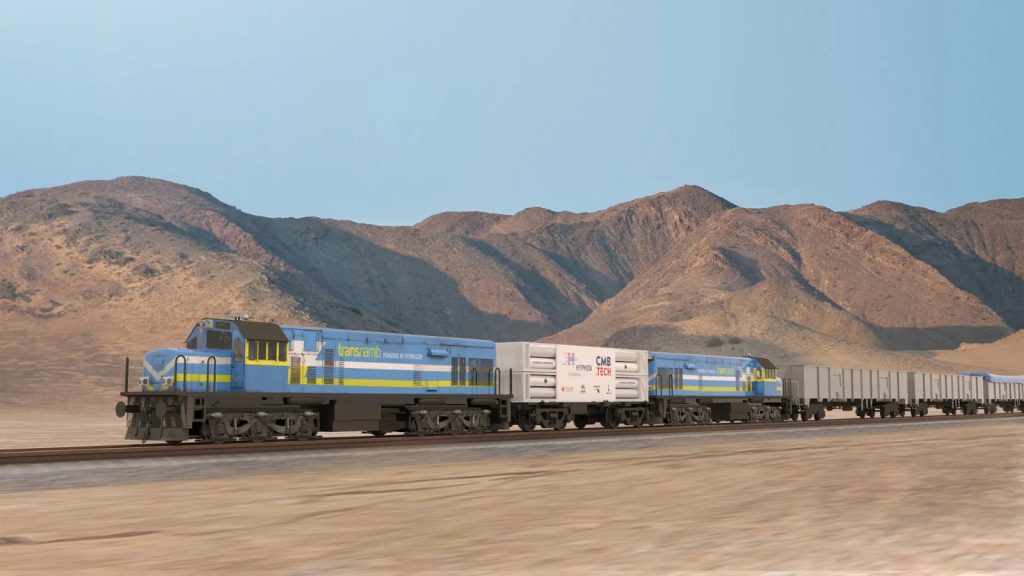
Namibia is set to introduce its first green hydrogen-powered heavy-duty freight locomotive later this year, marking a significant step in efforts to decarbonise the country’s rail sector.
The project is being led by CMB.TECH Namibia in partnership with TransNamib Holdings Limited and Africa Global Logistics. Assembly of the locomotive is currently under way at the facilities of Traxtion, a South African rail engineering and refurbishment specialist.
According to CMB.TECH, the locomotive will be powered by locally produced green hydrogen and deployed on the Walvis Bay–Windhoek freight corridor during a trial phase.
The pilot will involve 50 return trips between the Port of Walvis Bay and the container depot near Windhoek, a distance of 414 kilometres. The route climbs from 6 metres above sea level at the coast to 1,601 metres in the central highlands, providing a demanding operating environment.
Project developers say the gradient offers a practical test of traction performance, fuel substitution and system reliability under sustained load conditions.
Green hydrogen for the trial will be produced off-grid at CMB.TECH Namibia’s hydrogen facility in Walvis Bay. The locomotive is fitted with a 2,250-horsepower BeHydro dual-fuel hydrogen combustion engine, developed through a joint venture between CMB.TECH and Anglo Belgian Corporation.
The engine is designed to operate on both diesel and green hydrogen, enabling operators to reduce emissions while retaining operational flexibility. Hydrogen will be stored on a dedicated fuel tender positioned behind the locomotive, carrying two 20-foot storage units capable of holding up to 360 kilograms of compressed hydrogen each.
The system allows for refuelling via a mobile unit while the storage module remains on the tender, or through rapid container swapping to limit downtime.
CMB.TECH said the locomotive will retain full functionality at all times. Should the hydrogen system become unavailable, the engine will automatically continue operating on diesel, ensuring service continuity.
The initiative comes as TransNamib explores options to modernise its fleet, including repowering idled locomotives using dual-fuel hydrogen technology. Rather than procuring entirely new rolling stock, the project centres on converting an existing operational locomotive, demonstrating how hydrogen can be integrated into freight rail with limited infrastructure adjustments.
If successful, the trial could position Namibia among the early adopters of hydrogen-powered rail freight in Africa, while advancing the country’s broader green hydrogen ambitions centred on Walvis Bay and the emerging clean energy value chain.