Askari Metals Limited plans to commence reverse circulation (RC) drilling in the second quarter of 2026 at its wholly owned Uis Project, following encouraging Phase I trenching results at the DP Pegmatite Target that have strengthened confidence in the project’s exploration potential.
The company said the trenching programme has provided a strong technical basis for the next phase of subsurface exploration, with drilling expected to test the thickness and continuity of pegmatites below surface in fresh, non-oxidised rock.
Askari Executive Director Gino D’Anna said the results have reinforced the company’s confidence in the scale and quality of the mineralised system at Uis.
“These results materially strengthen our confidence in the scale and quality of the mineralised system at Uis and provide a clear technical foundation for drill targeting. With RC drilling scheduled to commence in Q2 2026, we are now moving rapidly toward the next major value inflection point for the project,” D’Anna said.
The Phase I trenching programme covered a total of 135 trenches over 7,269 metres and resulted in the collection of 2,098 one-metre channel samples.
Of these, 39 trenches, totalling 749 metres, were specifically focused on the DP target, yielding 325 samples to support future resource definition work. The programme utilised 40-metre spacing across the DP, PS and K9 targets to improve data accuracy.
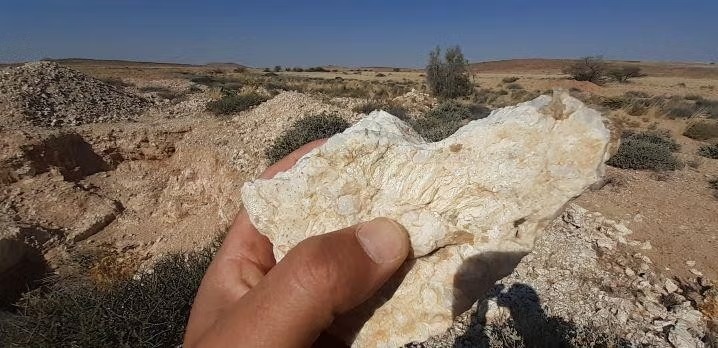
According to the company, trenching at the DP Pegmatite Target confirmed continuous polymetallic mineralisation across an approximate 700-metre strike length, with the main pegmatite showing an average surface thickness of around six metres.
“The Phase I trenching results from the DP Pegmatite Target are highly encouraging and confirm the presence of strong, continuous polymetallic mineralisation across a substantial strike length. Importantly, the main DP pegmatite extends for approximately 700 metres with an average surface thickness of around six metres, and has returned peak assays of up to 3360 ppm tin, 1.25% lithium oxide (Li₂O), 364 ppm tantalum, 587 ppm caesium and 3370 ppm rubidium,” D’Anna said.
The Uis Project is located adjacent to the operating Uis Tin Mine owned by Andrada Mining. Askari said the tantalum values identified at the project are comparable to, or exceed, average grades at the neighbouring operation, highlighting the project’s scale potential.
“Given the Uis Project’s location directly adjacent to Andrada Mining’s operating Uis Tin Mine, and the growing importance of tin, lithium, caesium, rubidium and tantalum in global supply chains, we believe the Uis Project has the potential to emerge as a strategically significant polymetallic asset,” D’Anna said.