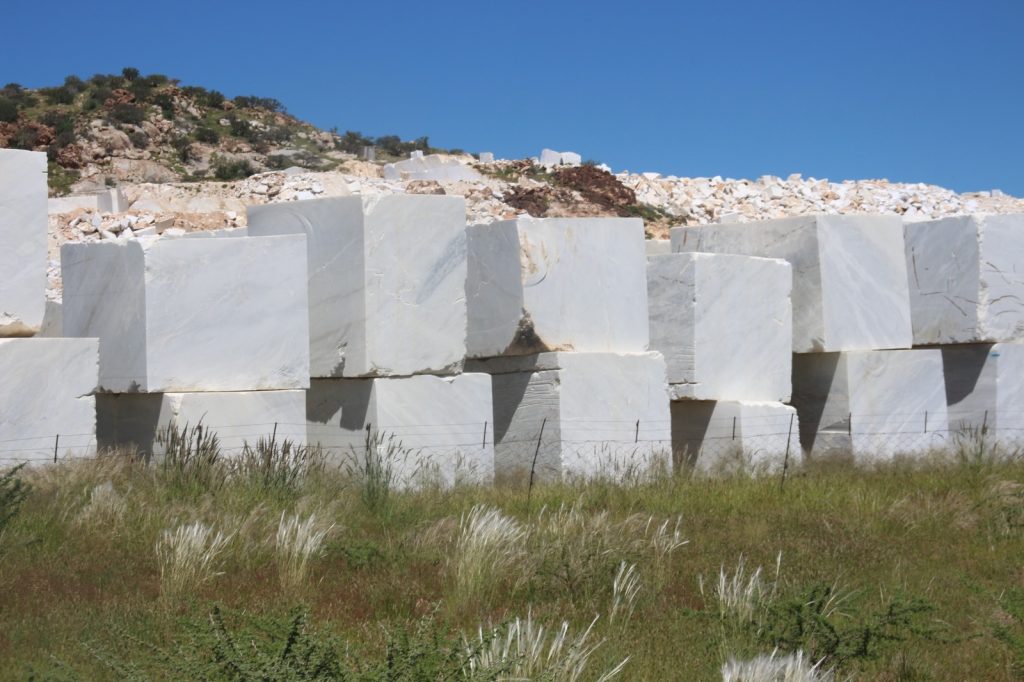
Ludi Namibia Mining and Investments has secured the renewal of its Environmental Clearance Certificate (ECC) for its marble mining operations in the Karibib District, supporting an estimated N$40 million investment in the project.
The approval was granted by the Ministry of Environment and Tourism, according to official documentation. The renewed ECC relates to Mining Licence (ML) No. 205, which covers marble mining and associated infrastructure in the Erongo Region.
The licence area covers about 502.8 hectares and is located roughly 15 kilometres south-east of Karibib, with established access to regional road networks and export infrastructure.
“The Ministry has approved the renewal of the Environmental Clearance Certificate for Mining Licence No. 205 in the Karibib District, Erongo Region,” the ministry said.
ML 205 was originally issued on 19 March 2019 and remains valid until 18 March 2029. Within the licence area, currently delineated marble resources are estimated at about 32 million cubic metres, with ongoing and planned exploration expected to significantly expand the resource base.
The updated Environmental Management Plan outlines mitigation measures for dimension stone mining, including quarrying activities and supporting infrastructure such as access roads and water supply systems. Processing activities are excluded from the plan, as these are undertaken separately in Karibib or Walvis Bay.
According to the Environmental Impact Assessment (EIA), the project targets high-value grey-white and black marble hosted within Damara metamorphic rocks. Mining is conducted through open-pit quarrying, using diamond wire saws and stone-cutting machinery to extract large blocks for further beneficiation.
The EIA estimates total project investment at about N$39.9 million, including construction-related expenditure of roughly N$23 million for quarry development, buildings and equipment. Ongoing operating costs are projected at around N$5 million per month, supported by working capital of nearly N$20 million.
“The project represents a significant long-term investment in Namibia’s dimension stone sector, with an estimated mine life of 25 years and beyond,” the EIA said.
Waste rock generated during quarrying is retained on site and reused for progressive rehabilitation as part of sustainable closure planning. Extracted marble blocks are transported to sorting yards before processing and export through established logistics routes.
Economically, the project is expected to create sustained employment, support skills development and promote local procurement, while contributing to government revenues through royalties, licence fees, taxes and export earnings. The investment also supports downstream value addition through local beneficiation.