Namibia has set a national target to achieve 70% renewable energy in its electricity mix by 2030, positioning the country as a regional leader in Africa’s low-carbon energy transition.
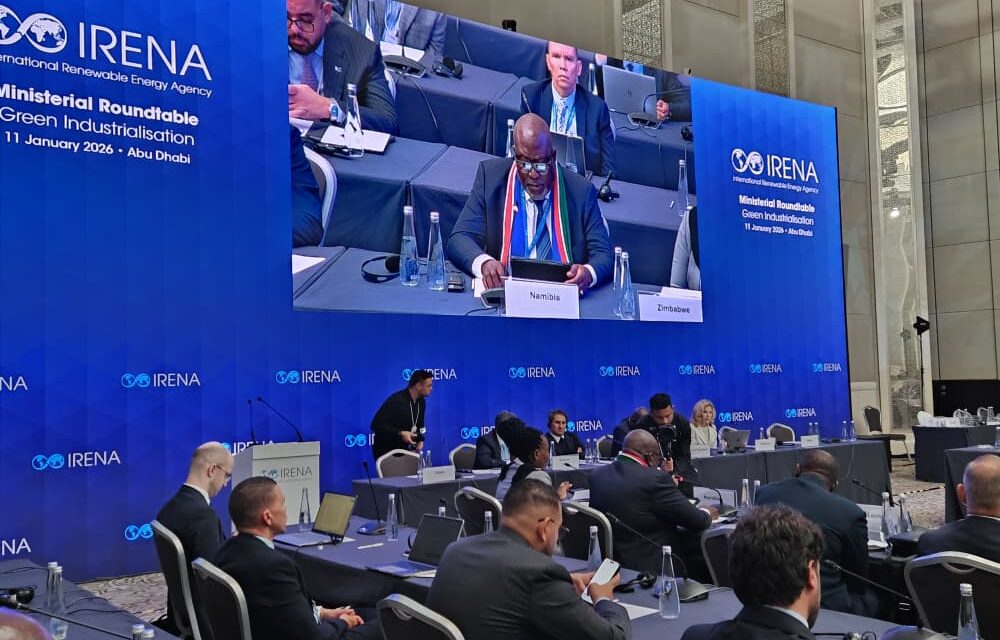
The target was outlined by Minister of Industries, Mines and Energy Modestus Amutse while addressing the 16th session of the International Renewable Energy Agency Assembly in Abu Dhabi, where Namibia showcased its renewable energy and green hydrogen progress and plans.
Amutse said Namibia is pursuing a development-centred energy transition anchored in policy reform, private sector participation and long-term industrialisation.
According to the minister, Namibia has already implemented key policy and regulatory changes, including the Modified Single Buyer model, which allows greater private sector participation while preserving system stability.
He said these reforms have attracted independent power producers and private developers, expanded generation capacity, diversified the electricity mix and reduced reliance on imported power.
“The success of the energy transition will ultimately be measured not only by installed capacity, but by its impact on people’s lives, communities and economies,” Amutse told the assembly.
He said green hydrogen forms a central pillar of Namibia’s transition strategy, describing it as a strategic pathway for industrial development and integration into global low-carbon value chains.
Amutse said Namibia has developed a Green Hydrogen Strategy and Roadmap focused on infrastructure development, regulatory frameworks and skills training. The strategy prioritises domestic value addition, including green steel and fertiliser production, while positioning the country as a future exporter of green hydrogen and related products.
Highlighting recent progress, Amutse pointed to Namibia’s achievement in producing commercially viable green steel, which he said demonstrates how renewable energy and green hydrogen can be integrated to create jobs and higher-value industrial outputs.
He also underscored the role of IRENA in supporting Namibia’s energy transition through technical assistance, policy guidance and investment facilitation.
“We remain determined to lead by example, demonstrating that a low-carbon, inclusive and development-centred energy transition is not only possible, but essential,” Amutse said.