Orano Mining Namibia says the Erongo Desalination Plant recorded its highest annual output to date in 2025, producing 17.59 million cubic metres of potable water for the Erongo Region, a 14% increase compared with 2024.
The company said the year-on-year growth demonstrates the plant’s ability to meet rising demand in the region and confirms its capacity to reliably deliver water at its current operational level of 22.5 million cubic metres per year.
Orano said the production milestone further reflects the plant’s long-standing performance record in supplying potable water to the region’s municipalities, mining operations and industries through NamWater.
The company also highlighted several operational milestones achieved during the year. These include 15 consecutive years of operation without a single lost time injury, reached in June 2025, and a new daily production record of 63,381 cubic metres achieved on 17 June 2025.
Orano said the Erongo Desalination Plant is positioned to increase supply to NamWater in response to rising demand driven by mining developments and the expansion of towns in the Erongo Region. While the plant’s current operational capacity is 22.5 million cubic metres per year, its full design capacity is 45 million cubic metres annually.
The company said planning is already under way to further expand capacity to meet anticipated future demand.
As part of its operational improvement programme, Orano said a pilot plant will be developed early in the year to test the potential use of a Dissolved Air Flotation system to manage sulphur-related challenges.
In 2025, the solar power plant developed at Trekkopje began supplying electricity to the desalination facility following successful commissioning. Orano said the integration of solar energy has reduced the plant’s carbon footprint, with cost savings passed on to customers.
According to the company, a total of 7 million kilowatt-hours of solar energy was supplied during the year, resulting in cost savings of about N$4 million, or an average of 60 cents per cubic metre of water produced. This allowed the company to reduce water tariffs by 2% over the past 12 months.
Orano said the Sorexa Solar Project, developed by Innosun Energy Holdings under a 10-year power purchase agreement, will supply up to 30% of the plant’s electricity requirements, in line with regulations set by the Electricity Control Board. The balance of power will continue to be supplied by NamPower.
The company added that the plant already operates an energy recovery system that captures pressure energy from the brine stream generated during the reverse osmosis process, feeding it back into operations to reduce overall power consumption.
Orano said it remains committed to continuous improvement and innovation at the Erongo Desalination Plant, which it described as a key enabler of regional and national development.
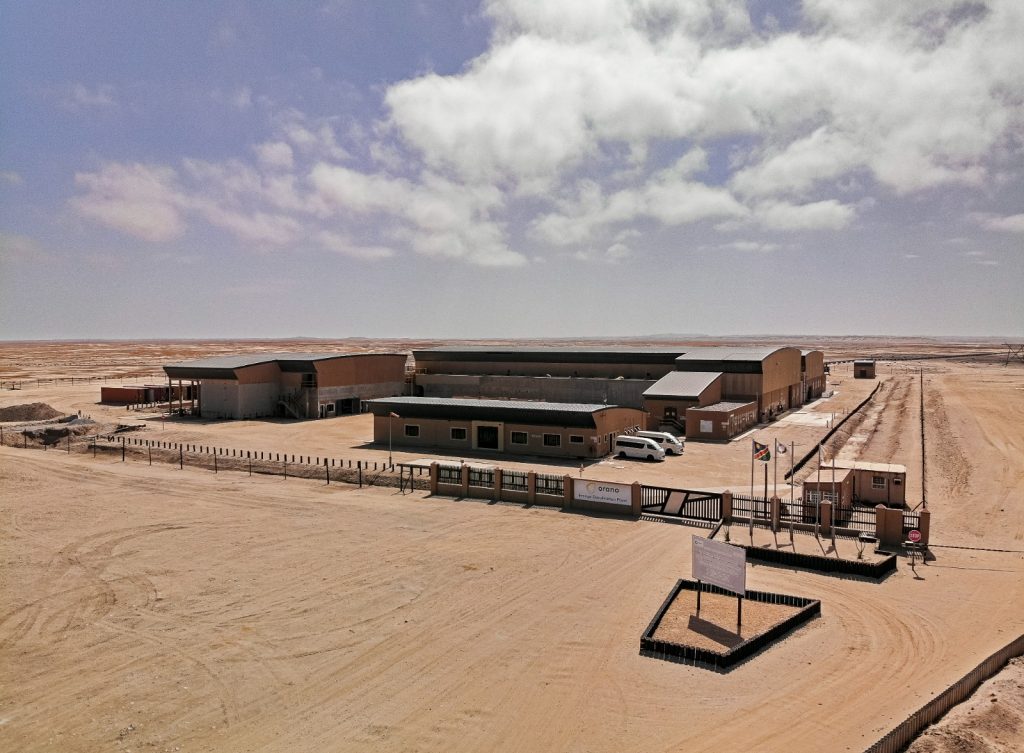
The Erongo Desalination Plant is owned by Orano and supplies a significant share of potable water to Swakopmund, nearby uranium mines and other industries. The facility is located about 35 kilometres north of Swakopmund near Wlotzkasbaken and is the largest reverse osmosis seawater desalination plant in Southern Africa.
Orano said the plant’s water meets national potable water standards and is tested regularly by independent third parties in line with NamWater requirements. The company added that its environmental management system is subject to ongoing independent monitoring and impact testing.