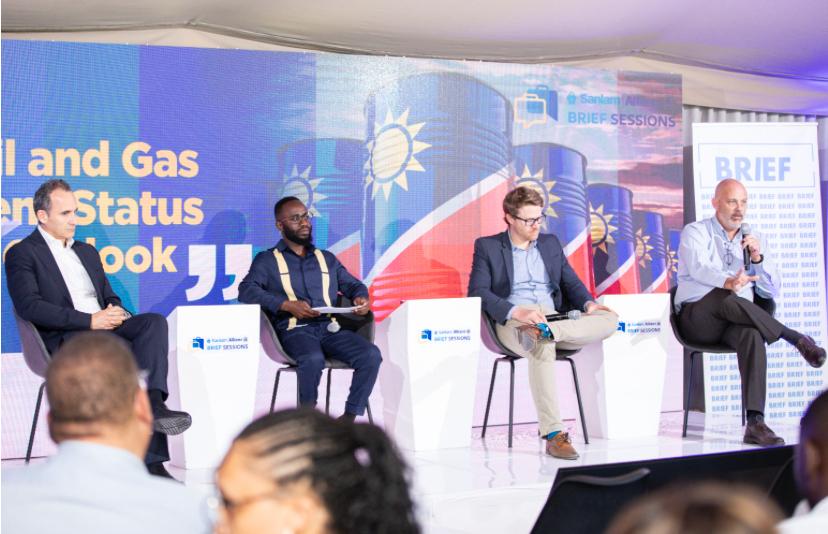
Namibia must provide policy stability, regulatory clarity and long-term project planning if it is to secure the multi-billion-dollar investment required to reach first oil, panelist speaking at the SanlamAllianz Brief Sessions on the country’s oil and gas outlook said.
Eduardo Rodriguez, Chair of Shell Namibia and the Namibian Petroleum Operators Association (NAMPOA), said Shell and its partners have drilled nine wells in Block PEL 39 over the past four years, but cautioned that Namibia’s operating environment presents some of the most complex conditions globally.
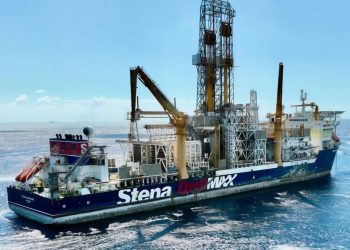
He stated that drilling takes place in ultra-deep water approaching 3,000 metres and as far as 300 kilometres offshore, intensifying technical and cost pressures.
“Supply chains stretching as far as 700 kilometres from Lüderitz further elevate costs. These are projects competing with Guyana, Brazil and the Gulf of Mexico, and an FID here ranges between USD 10–15 billion, more than Namibia’s entire GDP,” he said.
Rodriguez added that 26 deep-water wells have been drilled in under four years, signalling strong interest, but warned that capital will flow only if Namibia provides predictable fiscal terms, arbitration certainty and transparent regulation.
Subsea 7 Country Manager, Glen Fraser, said post-FID development requires capital expenditure of USD 20–25 per barrel, much of which could occur domestically if Namibia maintains project continuity. He warned that intermittent approvals would undermine supply chain investment. “A single FID provides a narrow four- to five-year horizon. For real local content growth, the industry needs continuous projects, not one-offs,” he said.
Economist Roland Brown said Namibia must view the sector within the context of wider pressures on state finances, noting the recent N$3 billion widening of the budget deficit and record-high government overdrafts. He said oil revenue could increase national income by more than 50 percent, but cautioned that the country already carries one of the highest tax-to-GDP ratios globally.
“More revenue on its own will not solve unemployment or poverty. The question is how future oil revenues will be used to improve livelihoods,” Brown said, urging early clarity on spending priorities.
Brown also raised concern about continued delays in finalising frameworks on stabilisation, local content and arbitration, noting that regulatory uncertainty hampers Namibia’s ability to compete for capital.
“Namibia’s oil and gas potential remains extraordinary but hinges on stable regulation, sequenced development and disciplined public financial planning,” he said.
Speakers agreed that Namibia’s offshore discoveries place it among the leading global exploration frontiers, but also stressed that scaled development will depend on sustained collaboration between government, operators and service providers to ensure lasting national benefit beyond initial expectations.